

Touching down in Miami for Consensus this year, I had a specific set of questions in mind, several of which would never be answered on the main stage. My focus coming in was not whether tokenization works. We are, quite frankly, past that. The question I kept returning to was whether tokenization is actually deployable at scale inside regulated institutions operating under real cost, compliance, and operational constraints, and not just at the JPMorgans and Franklin Templetons of the world. I came in holding particular curiosity for what this transition looks like for regional banks and firms with smaller footprints, the ones doing a very different calculation than the institutions whose names anchor every headline.
I wanted to learn more about the experiences of those who have crossed the pilot-to-production chasm and what it cost them to get there. Which asset classes are moving and which are stalled, and why? How are firms approaching the conversation about risk profiling, and what frameworks are they using to evaluate whether a tokenization initiative is viable before committing significant capital? Where are the legal and compliance frameworks still too thin to support deployment, and what happens to firms that move anyway? These are not questions you bring to a keynote. Nobody is going to answer them from a stage sponsored by the people still trying to sell you the vision.

The numbers, the institutional names, and notably the language had shifted. "Pilot" was out. "Production" was in. And yet, what does "pilot" even mean in the context of developing and deploying in rigorous institutional settings, without it seemingly falling into the special projects category and being long-forgotten within a six- to twelve-month window? I have seen that happen. More than once. That question lingered across nearly every side conversation I had, from sessions among Wynwood, Surfcomber, Sagamore, and the Miami Beach Convention Center, into evenings at SoHo House, Casa Tua, and elsewhere throughout my nearly week-long stint. What I kept hearing was something considerably more nuanced than the main stage was prepared to reckon with.
For firms outside the JPMorgan, BlackRock, and Franklin Templeton tier of production capacity, moving tokenization pilots into production operations has not offered a straightforward path to meaningfully predictable outcomes. That is partly about regulation, but equally about cost, and the realities of both have proven harder to model than early projections suggested. The question had been answered for some institutions, asset classes, on some rails, but many others face delays in strategies, budgets, and timing expectations due to fluctuating market conditions and the need for regulatory clarity.
My hope for this article is to explore the gap between the narrative presented on the main stage and the reality experienced by practitioners. Furthermore, I hope it will provide a fitting starting point for a five-part Consensus recap, as other topics - such as agentic commerce, security concerns, legislative insights, and compliance issues - depend on whether the infrastructure layer is truly ready for production or still perceived as unprepared by an increasingly skeptical audience.
A note on sources before we go further
Not every question I brought to Miami got answered in Miami. Some of the most important threads surfaced in conversations that required external research, practitioner documentation, and regulatory guidance, all of which were published without much fanfare. What follows draws on both what I heard consistently across Consensus sessions and side rooms, and what further investigation after the week confirmed. Where a finding comes from outside Consensus, specifically, I have noted the source.
The Numbers Are Real. So Is the Gap.
What The Production Data Actually Shows
One of the main questions the industry spent 2022 to 2024 debating, whether institutional tokenization would move from proof-of-concept to production, has been answered, at least partially.
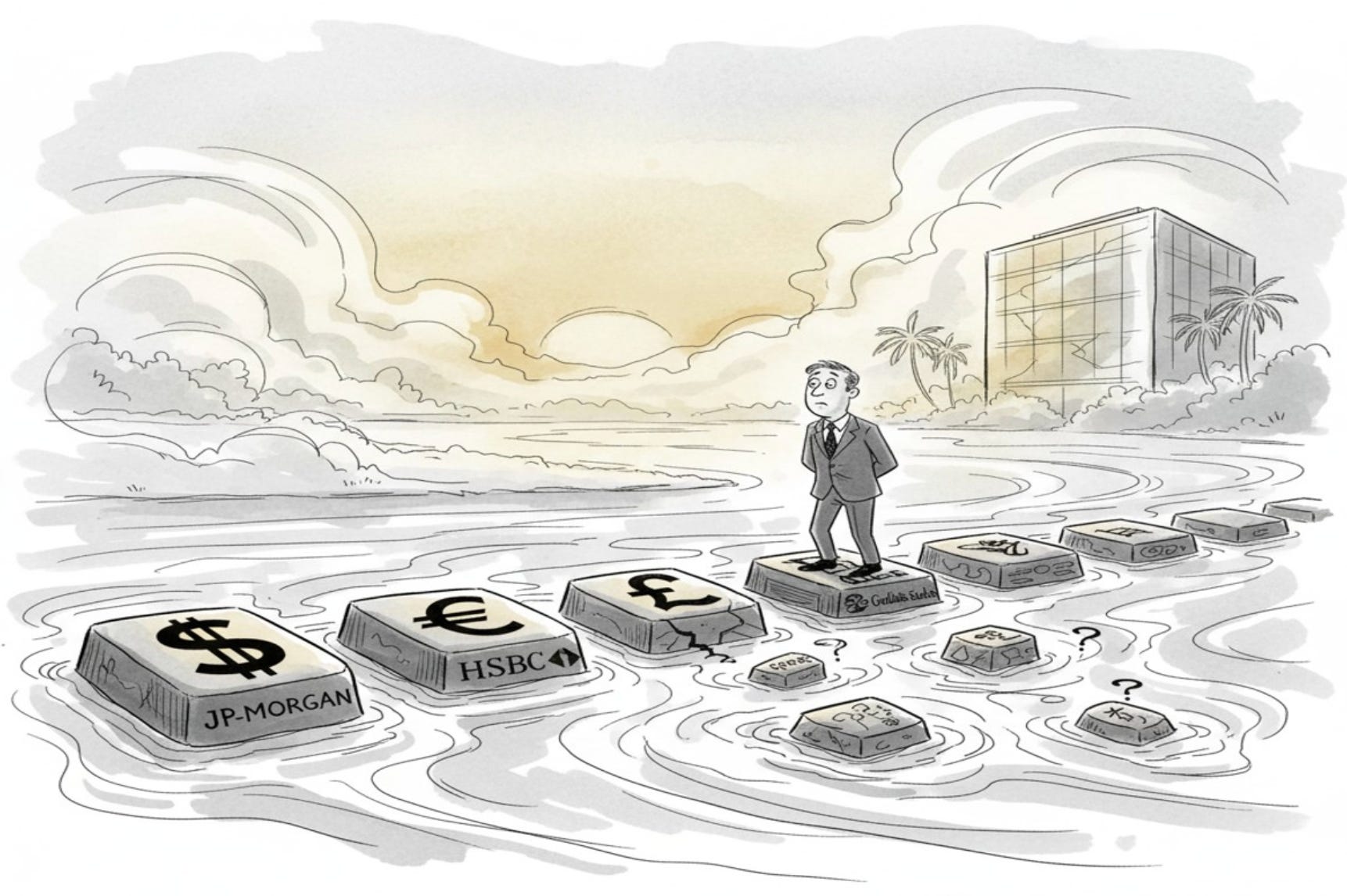
A year ago, Citi’s tokenized deposit system was handling millions. “Now we’re moving billions,” said Ryan Rugg, Global Head of Digital Assets for Citi’s treasury and trade solutions unit, speaking at Consensus Miami. [1] The demand, she said, is coming from clients who want to move money around the clock, not just during banking hours. JPMorgan’s Kinexys platform has processed more than $1 trillion in transactions, according to Kara Kennedy, who leads market development for the bank’s digital assets unit, speaking from the same panel [1], a figure JPMorgan’s own platform documentation puts higher, at $1.5 trillion since inception, with more than $2 billion processed daily. [2]
The broader market confirms the direction. As of April 2026:
Total tokenized real-world assets across public chains reached approximately $441 billion in represented asset value, with tokenized US Treasuries leading by category and private credit growing fastest in percentage terms. The represented asset value reflects the total capital committed to tokenized structures, including institutional vehicles that are not yet fully reflected in on-chain data. The on-chain distributed figure, which is actively traded and settled on-chain, stood at approximately $27.65 billion over the same period [3]
BlackRock’s BUIDL fund holds approximately $2.58 billion in assets under management across eight blockchains, with Moody’s issuing a AAA-mf rating to the fund in May 2026, the first time a tokenized fund on Ethereum has received that designation [4]
Franklin Templeton’s BENJI tokenized fund suite has grown to approximately $1.98 billion in assets under management as of April 29, 2026, across eight blockchain networks [5]
Morgan Stanley, JPMorgan Chase, Charles Schwab, Mastercard, BlackRock, and Goldman Sachs all sent representatives to Consensus Miami, not to explore the concept but to work through the operational questions of how [6]
If the proof was ever in the pilot, the numbers are now the tell. For institutions with the balance sheet to absorb the cost and the appetite to hold through the risk, the proof-of-concept debate is largely over.
But Most Of The Industry Is Still Spinning
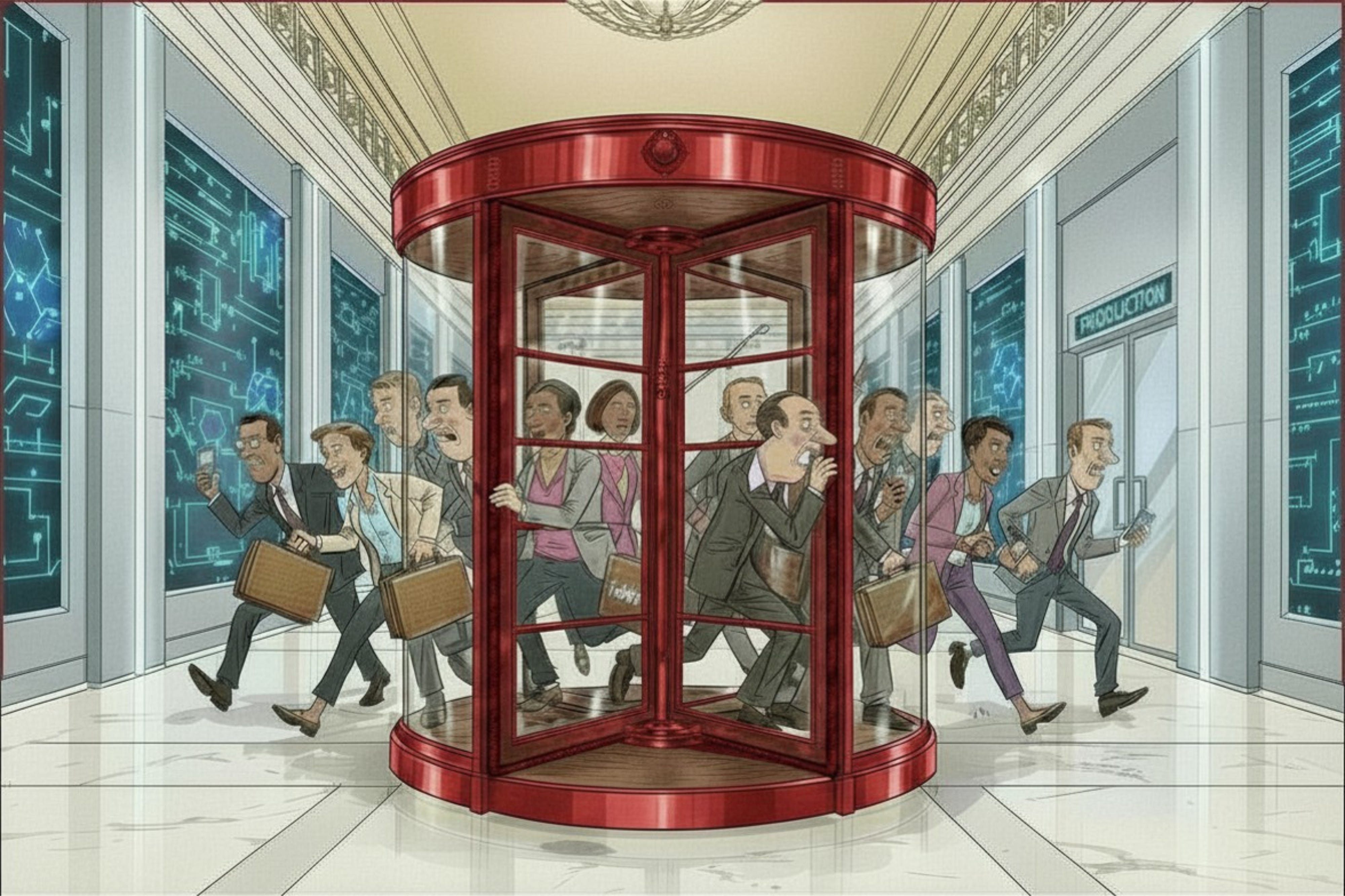
Yuval Rooz, Chief Executive of Digital Asset and Co-Founder of the Canton Network, said something in March that was still circulating at Consensus: “People have assigned a lot of value to these networks based on what they say they’ll become. But when you look at how much actual business they’re doing, there’s a massive disconnect.”[7]
That quote landed differently when it came from the person running the network. It is not a critic talking. It is the founder of one of the most institutionally credentialed blockchain platforms in the world, acknowledging, on the record, that the gap between what has been promised and what is actually being processed is real.
Writing in Forbes ahead of Consensus, Boaz Sobrado was the first to quantify what sits behind that admission at the industry level. Canton claims more than 600 participating institutions and around $6 trillion in processed assets. Almost all of that volume comes from a single client, Broadridge's Distributed Ledger Repo platform, which, according to Rooz, processes approximately $400 billion in repo transactions daily. [7] Strip Broadridge out, and the network's actual production breadth looks considerably thinner than the headline figure suggests. What reads as institutional scale is, at this point, largely one client relationship reflected across a very large number. [8]
That pattern is not unique to Canton. Industry analysts estimate that only a fraction of large enterprise blockchain pilots have reached production, leaving most institutions in what consultants now openly call "pilot purgatory." [8] The phrase kept coming up at Consensus, not from critics but from practitioners. The picture those conversations painted was consistent: a firm completes a successful proof of concept, secures internal sponsorship, and then enters a multi-year process of compliance review, legal opinion, legacy system integration, risk committee sign-off, and regulatory engagement, any one of which can stall or kill the deployment. The technology clears the bar. The organizational and regulatory infrastructure around it frequently does not, at least not on any timeline the original pilot budget anticipated.
And that is before we talk about who is realistically at the table. JPMorgan, BlackRock, and Citi can absorb the cost of running parallel infrastructure during a multi-year migration. Regional banks, community banks, and smaller commercial institutions operate on a very different margin structure. For them, the question is not whether tokenization is directionally correct. It is about whether the internal resource requirement, the compliance overhead, the technology spend, and the timeline to any measurable return make sense relative to everything else competing for the same budget. For most, the honest answer right now is no, and that is not a failure of vision. It is a rational reading of the numbers.
This raises the question that the main stage did not spend much time on. How does a mid-sized institution evaluate whether a tokenization initiative is viable before committing significant capital? What does a risk framework actually look like when the data infrastructure to support it is still being built? And who bears the cost when a firm moves ahead without one? EY has published a six-pillar due diligence framework for tokenized asset risk, and Particula has completed more than 200 risk assessments across tokenized assets using its PDARF methodology. [16] [17] Both identify the same primary constraint: data availability. The lack of reliable, high-quality data makes structured due diligence and ongoing monitoring difficult, and limited visibility into product lifecycles and asset modifications further complicates matters. Firms moving ahead without that infrastructure are accepting more model risk than their risk committees may realize, and in a regulated environment, that gap does not stay invisible indefinitely.
The Production Numbers and the Purgatory Critique: Two Sides of the Same Coin
Different Parts Of The Same Transition
This is where most coverage of Consensus missed the texture entirely. The assets that have made it to production share a specific profile:
Simple in structure and familiar in legal treatment
Operated by institutions with existing regulatory relationships
Settled on permissioned or hybrid rails that do not require regulators to engage with novel legal questions
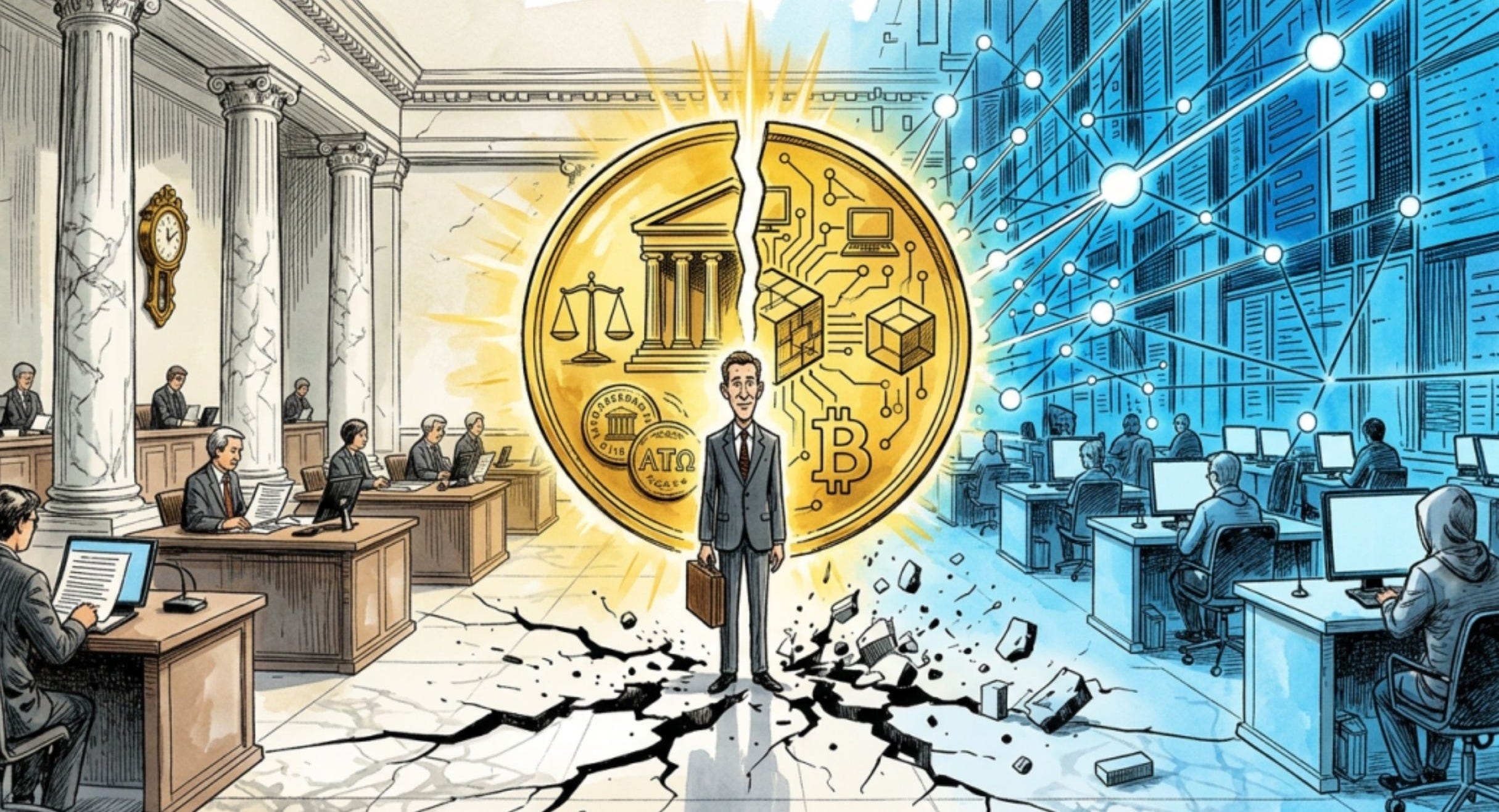
BlackRock BUIDL works because it is a money market fund with a blockchain wrapper, not because it resolved the hard questions about tokenized equity settlement or cross-border asset transfer. [7] The assets still stuck in purgatory are structurally different in each case. In this case, tokenized treasuries entered production because they are familiar to institutional investors, carry minimal credit risk, and generate yield that can be delivered programmatically through smart contracts. [18] Private credit presents a harder problem: the asset class has always suffered from manual servicing, opaque valuations, and minimal secondary liquidity, and while tokenization addresses each of those frictions in theory, the data and legal infrastructure to make it work in practice is still being assembled. Real estate is harder still, with jurisdictional variability in property law making cross-border tokenized structures legally fragile in ways that do not surface in pilot conditions but become very visible when a holder tries to exit.
There is a related, underreported dimension of the illiquidity problem that circulated in practitioner conversations ahead of and during Consensus week. Tokenizing an illiquid asset does not make it liquid. That sounds obvious, but it is not how the technology is routinely described. “I think there’s still this idea that tokenizing something illiquid will somehow magically make it a liquid asset, which is just not true,” said Oya Celiktemur, Ondo Finance’s sales director for EMEA, speaking at Paris Blockchain Week in April. [21] The data confirms the point: tokenized real estate grew from approximately $35 million to $296 million in on-chain distributed value in the year to April 2026, strong percentage growth, but still a fraction of a market dominated by Treasuries and money market funds that were already liquid before they were tokenized.
Many institutional-grade tokens in less-liquid asset categories have fewer than ten active wallet addresses per month. [22]
Issuance is not the same as secondary market depth, and firms evaluating tokenization as a strategic initiative need to ask not only whether an asset can be tokenized, but whether there will be a buyer when they need to exit, and under what conditions and timeline that exit is actually possible.
There is also an interoperability dimension that received almost no main-stage coverage but came up consistently in practitioner conversations. Asset-backed tokens issued on one network today often cannot move easily to another, creating fragmentation and limiting secondary market depth in ways that are invisible at the point of issuance. [19] Bridges between regulated bank chains and public networks have historically been the most exploited surface in crypto infrastructure, yet most discussions of tokenization deployment treat interoperability as a future problem rather than a present one. For institutions building on these rails now, it is already a present one. And sitting underneath the interoperability problem is a compliance layer that surfaced pointedly at the AWIC, VerifyVASP, BDO, and Hedera side panel, “Trust Under Pressure: Risk, Regulation, and the Future of Crypto Compliance,” held at the Miami Beach Women’s Club during Consensus week: when tokenized assets move across networks and counterparties, the Travel Rule obligation to transmit originator and beneficiary data travels with them, and the infrastructure to fulfill that obligation in a multi-chain, multi-jurisdiction environment is, at best, inconsistently built. That is a piece this publication will return to shortly, because the gap between what the technology can do and what compliance requires at the point of transfer is wider than most deployment conversations acknowledge.
What The IMF Said That Most Glossed Over
The IMF's April 2026 note on tokenized finance, authored by Tobias Adrian, Financial Counselor and Director of the Monetary and Capital Markets Department, argued that tokenization constitutes a fundamental reconfiguration of how trust, settlement, and risk management are organized across the global financial system, not a marginal efficiency improvement to existing infrastructure. [3] When the IMF uses language like that, it is worth pausing on.
One piece of regulatory progress that did not get the attention it deserved: in March 2026, the Federal Reserve, the OCC, and the FDIC jointly clarified that an eligible tokenized security receives the same regulatory capital treatment as its non-tokenized equivalent. [20] Before that guidance, some institutions were treating tokenized versions of familiar instruments as novel assets with uncertain capital treatment, a real deterrent to deployment that is now formally removed. That changes the risk calculus for regulated institutions in ways that have not yet fully translated into deployment timelines, and it is the kind of development that compounds gradually rather than all at once.
A Note On The Architecture Critics
Not everyone reading these developments arrives at the same conclusions about what they mean. Some observers, including technically fluent analysts worth taking seriously, look at the same DTCC architecture, the same root wallet authority, the same compliance-aware protocol requirements, and see not an efficiency upgrade but a programmable compliance envelope that converts ownership into conditional permission. [8] That reading warrants engagement rather than dismissal, and this publication will return to it as the DTCC service moves toward its July limited-production launch and October full launch. The operational implications for how tokenized entitlements actually behave under stress, when freeze authority gets used, when LedgerScan constitutes the official record over the public chain, are questions the industry has not fully answered in public.
For now, the production story is real. The architectural questions it raises are also real. Both things are true.
The Build-versus-Partner Decision Is Already Being Made
Not Every Firm Will Build Its Own Rails, And That Is Fine
The production numbers belong to a specific tier of institution, one with the legal resources, engineering capacity, regulatory relationships, and balance sheet to build and maintain proprietary blockchain infrastructure. For most firms, that profile does not apply. Pretending otherwise is one of the quieter sources of inertia in the pilot purgatory problem.
Core platform upgrades are expensive in ways that do not show up cleanly in a pilot budget. The shift from T+2 to atomic settlement is not a speed improvement bolted onto existing infrastructure. It is a structural change in which every downstream obligation comes due: compliance verification, collateral posting, counterparty confirmation, and liquidity provision. In a T+2 cycle, those obligations are distributed across a settlement window that gives firms time to net positions, source liquidity, and resolve exceptions. Atomic settlement collapses that window entirely. Everything managed during the float must now be pre-positioned or instantly available. [9] For firms whose back-office infrastructure was built around T+1 or T+2 assumptions, the gap between what tokenized settlement promises and what their operational stack can actually support is a real constraint, not a future consideration.
That constraint is driving a natural market response: firms that cannot build are looking for partners who can bring compliant, complementary solutions to their existing infrastructure rather than requiring them to replace it.
The White Label Layer Has Matured
The partnership and white-label layer of the tokenization market has developed considerably in the past eighteen months. The three most institutionally credible options on the RWA tokenization side:
Securitize remains the US institutional benchmark, as the first SEC-registered transfer agent for digital asset securities, with compliance infrastructure covering investor onboarding, transfer agent functions, and regulated secondary market access [10]
Tokeny, majority-owned by Apex Group and operating under the ERC-3643 standard, has tokenized over $32 billion across its network and covers compliance across more than 180 jurisdictions, making it the strongest option where MiCA or cross-border EU exposure drives the decision [11]
Brickken, which was on the ground at Consensus and presented at PitchFest, offers a multi-asset white-label platform with built-in KYC, AML, and lifecycle management across equity, debt, funds, and private credit [12]
On the stablecoin side, where a growing number of institutional firms are beginning their on-chain journey rather than jumping directly to tokenized securities, ShredPay is one example of a firm building compliant infrastructure for institutional stablecoin holdings and payment flows, worth watching as The GENIUS Act implementation takes shape. [23]
Taxonomy Matters More Than Most Due Diligence Processes Acknowledge
The framework covered in On the Ledger No. 001, drawing on Sandy Kaul’s three-category structure of synthetic exposure tokens, digitally native structures, and digital twin models [13], remains the right starting point for understanding what you actually own and how your position settles. But it is worth noting that the passage of the CLARITY Act through the Senate Banking Committee has made the taxonomy question more concrete rather than more abstract. The jurisdictional boundaries between the SEC and CFTC, the classification framework for novel token structures, and the legal treatment of tokenized financial instruments are no longer purely theoretical. They are being answered by statute.
The Due Diligence Question Firms are Not Asking Often Enough
Due diligence on white-label and partnership solutions is not a one-time exercise. The compliance landscape these platforms operate within is actively being written, and a platform that was the right fit under the pre-CLARITY regulatory posture may not remain so once implementing regulations arrive. Before selecting a tokenization partner, firms should be pressure-testing on at least three dimensions:
Regulatory Durability: Does the platform have the regulatory relationships and technical architecture to stay compliant as the statutory framework evolves, not just as it stands today?
Jurisdictional Fit: Is the platform’s compliance model built for the specific asset class, investor base, and regulatory regime you are operating in, or is it a general solution being applied to a specific problem?
Switching Cost Realism: What does mid-deployment migration actually look like if the platform cannot adapt? The cost of switching infrastructure partners is high. The cost of deploying on a platform that cannot keep pace with the statutory framework is higher. [14]
The Hard Truth Nobody Is Marketing To You

Writing about tokenization without acknowledging the pilot purgatory problem, the liquidity illusion, the compliance gaps, and the cost realities is not analysis. It is marketing, and the industry has plenty of that.
For technology, operations, and product leaders at commercial banks, the question this piece is really asking is whether your internal roadmap reflects the infrastructure as it actually exists or the infrastructure as it has been described to you. Those are not the same thing, and the distance between them tends to surface well after budget approval and well outside the OKR review cycle. Baker McKenzie’s analysis of current tokenization implementations found that costs remain prohibitive for all but the largest institutions and that scale will only be achieved when numerous market players transact on common or interconnected platforms, neither of which exists at the level assumed by today's pilots. [24] The risk-profiling data gap rarely appears in pilot proposals. And most institutions do not yet have the internal resources to provide the kind of decisive, informed evaluation that a decision of this complexity actually requires. Following the news, understanding the narrative, and even believing in the direction, none of that fully equips a team to evaluate deployment decisions in a space where the distance between vendor marketing and operational reality is still this wide.
When Language Gets Blurry Fast
Trusting a vendor to fill that gap, with limited due diligence, in a space you are not fully equipped to evaluate, is a different kind of risk than the ones showing up in your risk register. I have seen well-intentioned initiatives stall, be reassigned, or be canceled entirely, and produce findings that nobody anticipated. The cause is rarely the technology. In equal measure, the fate of these projects is determined by the architecture and the firms supporting their implementation. The decision architecture around tokenization at most institutions has not yet been built to handle the complexity of what is actually being decided. And in a space where proof of concept has become proof of everything, proof of trust is the one thing you still have to earn the hard way.
The Auditors Do Not Care About Your Pitch Deck
For legal, risk, and compliance professionals, the nuance that matters most is the one the main stage consistently flattens. Not all tokenized assets carry the same ownership structure, settlement finality, or counterparty exposure. A synthetic exposure token, a digitally native structure, and a digital twin model are not interchangeable descriptions of the same thing. The model determines the failure mode, and the failure mode determines where liability lands. The Celsius collapse is a perfect example where the core failure was not technological but structural: 600,000 users believed they held assets while the bankruptcy court found they had transferred full legal title under the Terms of Use, becoming unsecured creditors against an estate with a $1.3 billion hole. The gap between on-chain presentation and off-chain legal reality only became visible after withdrawals were frozen, and that gap is precisely what the architecture critics are asking about when they raise the DTCC root wallet authority and the LedgerScan official record question. It deserves a precise answer, not a distancing statement.
For the startups building infrastructure for these environments, the signal from Consensus was consistent: the institutions that matter are no longer asking whether tokenization is real. They are asking who can deliver compliant, auditable, integration-ready infrastructure that survives a legal opinion and a risk committee simultaneously. That is a narrower market than the one being described on most conference stages, and it is more valuable.
The constraints are real and worth naming plainly. The data infrastructure required for rigorous risk assessment does not yet exist at scale. For regional banks and smaller commercial institutions operating on fundamentally different margin structures than JPMorgan and BlackRock, the rational calculation looks very different, and pretending otherwise is its own form of distortion.
But there is a difference between a firm that has done that calculation honestly and a firm using complexity as a permanent justification for not doing it at all. The infrastructure being built right now is not going to pause. The settlement rails, the custody standards, the compliance architecture, the distribution relationships in the asset classes that actually matter for the next phase of this market, those are being defined now, by the firms that showed up. By the time the picture is fully clear, the foundation will already belong to someone.
The firms that navigate this transition well will be the ones that hold both realities at once: the production story is real, and the hard work of getting there has barely begun for most of the industry.
The ones deferring that work are not avoiding the question. They are accumulating it, with interest.
Part Two covers the security fallout from agentic AI and what the practitioner conversations at Consensus actually revealed about the threat environment. Coming this week.
Sources
[1] CoinDesk, “Tokenization Won’t Disrupt Banking Rails But Improve Them, Wall Street Executives Say,” May 5, 2026.
[2] J.P. Morgan, “Introducing Kinexys,” jpmorgan.com.
[3] FinTech Weekly, “What Is Real-World Asset Tokenization? The IMF Just Called It a Structural Reconfiguration,” April 6, 2026.
[4] Bitcoin.com News, “BlackRock’s Onchain BUIDL Fund Secures Top AAA-mf Rating From Moody’s,” May 13, 2026.
[5] Stellar Development Foundation, “Franklin Templeton, Stellar Development Foundation Mark Five Years of BENJI,” April 29, 2026.
[6] Varmeta, “Consensus Miami 2026: The Future of On-Chain Finance and Its Impact,” May 11, 2026.
[7] Forbes / Boaz Sobrado, “’Massive Disconnect’: Wall Street’s Blockchain Boom Hits a Wall,” May 4, 2026.
[8] Courtenay Turner, “The Tokenization Chokepoint,” Substack, May 4, 2026.
[9] The RWA Ledger, “On the Ledger No. 002: Eighteen Months of Lobbying, Legislation, Closed Rooms, and Then a Shareholder Letter,” April 14, 2026.
[10] Pintu News, “8 Best RWA Tokenization White Label Platforms 2026,” March 2026.
[11]The Block, "Apex Group Unit Tokeny Taps Polygon for Interoperable Tokenization Platform T-REX Ledger," March 19, 2026.
[12] CoinGape, “8 Best White Label RWA Tokenization Platform Development Companies,” 2026.
[13] The RWA Ledger, “On the Ledger No. 001: What You Actually Own When You Own a Tokenized Asset,” 2026.
[14] The RWA Ledger, “Congress Put Tokenization on the Record. The Hard Architecture Questions Are Still Unanswered,” March 28, 2026.
[15] Fireblocks, “The Executive’s Guide to Tokenization in 2026,” May 2026.
[16] EY, “Token Due Diligence: A Structured Approach to Digital Asset Risk,” 2026.
[17] Particula, “Token Risk Assessment: PDARF Methodology,” 2026.
[18] Finextra / Muhammad Qasim, “Tokenized Real-World Assets: Reading the 2026 Numbers Behind the Headline Growth,” May 2026.
[19] InvestaX, “Real World Asset Tokenization: Trends and Outlook for 2026,” May 2026.
[20] Zeeve, “Institutional Tokenization in 2026: 5 Signals Banks and Asset Managers Should Watch,” April 2026.
[21] CoinTelegraph, “Tokenization Doesn’t ‘Magically’ Fix Illiquid Assets,” Paris Blockchain Week panel, April 17, 2026.
[22] arXiv, “Tokenize Everything, But Can You Sell It? RWA Liquidity Challenges and the Road Ahead,” August 2025.
[23] BusinessWire, “ShredPay Launches Unified Blockchain Finance Platform for Retail and Institutional Users,” March 9, 2026.
[24] Baker McKenzie, “Tokenization in Financial Services,” June 2025.
[25] Calibraint, “Real Estate Tokenization Legal Pitfalls: Why Projects Failed in 2025 and How to Avoid Them in 2026,” January 2026.